Sell It Before You Print It: The PTA Cookbook Plan That Beats the Storage Cupboard
Every PTA has one: the lovely idea that arrives with a burst of enthusiasm and leaves behind eight boxes of unsold stock. The school cookbook is a classic. It sounds warm, inclusive and faintly wholesome — Grandma's flapjack, Year 4's dubious smoothie, the head teacher's chilli. Then you print 500 copies, sell 180, and spend the next two years using the rest as raffle prizes.
The fix is not to abandon the cookbook. It is to run it like a small publishing project rather than a craft morning. Done properly in 2026, a community cookbook can raise real money, bring in families who never volunteer for the summer fair, and give local businesses a reason to sponsor something they actually understand.
Start with orders, not a print quote
The most common mistake is printing first and selling later. Flip it. Build a simple pre-order page or paper form, set a deadline, and ask families to pay upfront. A modest target — say 120 copies — tells you whether the idea has legs. If you get 40 expressions of interest, you have saved yourselves a great deal of grief and a large invoice.
Pre-orders also give you a natural sales script. 'We are making a school cookbook, would you like to order one?' is much easier than 'Please buy this book we already bought.' Use the school newsletter, the class WhatsApp groups and a stall at a coffee morning. Keep the form short: name, contact, number of copies, payment method.
Recipes: ask for originals, not photocopies
Recipes are a strange area of copyright. A bare list of ingredients is usually not protected, but the written method, the headnotes and the photographs often are. Do not lift recipes from a website, a supermarket card or a celebrity cookbook. Ask contributors to send in dishes they actually cook, in their own words, and confirm they are happy for the PTA to publish them.
Give people a simple template: title, who it is from, ingredients in metric, method, and any notes. Ask for original family favourites rather than copied ones. If someone sends a recipe that is clearly from a published book, thank them and leave it out. It is not worth the risk.
Also think about names. Children's full names and class details should not go into a public book without permission. First names and a year group are usually enough. If a recipe comes from a grandparent or a local shop, credit them properly — it makes the book feel more generous and more trustworthy.
Allergens: be careful, be clear, do not promise too much
The UK's 14 major allergens need to be on your radar: celery, cereals containing gluten, crustaceans, eggs, fish, lupin, milk, molluscs, mustard, nuts, peanuts, sesame, soya, and sulphur dioxide. You are not producing a commercial food product in the same way as a bakery, but you are publishing recipes people will cook for their families. A little care goes a long way.
Ask contributors to note obvious allergens in their recipes, and add a short, honest disclaimer at the front: recipes have not been tested in a professional kitchen, ingredients can change, and anyone with a serious allergy should check labels and make their own judgement. Avoid sweeping claims like 'nut-free' or 'dairy-free' unless every recipe has been properly tested and every ingredient checked. 'Contains milk' is helpful. 'Safe for everyone' is a promise you cannot keep.
If you are sampling food at a launch event, treat it like any other food stall: keep it simple, label what you can, and do not guess.
Cost the book before you fall in love with it
Get at least three quotes from local printers. Ask about paper weight, binding and the cost of a proof copy. Spiral binding is practical for a cookbook because it lies flat on the worktop, but it is usually dearer than perfect binding. A5 is cheaper than A4 and easier to hold. Colour photographs push the price up quickly, so consider a few colour sections rather than glossy pages throughout.
Work out your unit cost before you set a price. If 200 copies cost £800 to print, that is £4 a copy. Add editing, proofing and any design costs, then decide a sensible sale price — often £8 to £10 for a community cookbook. Do not forget postage or card payment fees if you sell online.
Print to your pre-orders plus a small buffer — perhaps 10 to 15 per cent — for the launch event and late buyers. If you have 150 pre-orders, print 170. Not 500.
Local ads can carry the risk
A cookbook is a nice home for local advertising because it stays in kitchens for years. Offer half-page and full-page slots to nearby businesses: the bakery, the garden centre, the tutor, the plumbing firm. Set clear rates, a copy deadline and a simple invoice. Keep the design consistent so the book does not look like a jumble sale.
A realistic small budget might be £300 to £500 from local ads. That money can cover a chunk of printing, which means the copy price can stay low enough for families to say yes.
Test, edit, then launch properly
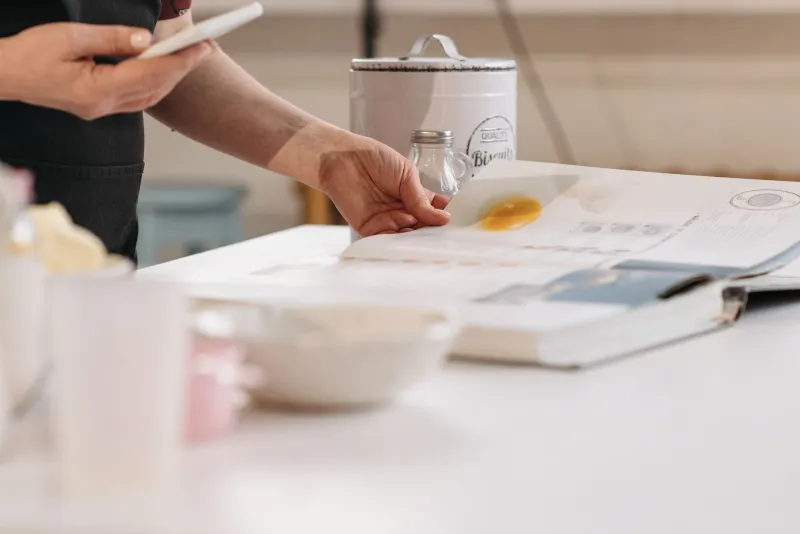
Ask a handful of volunteers to cook three or four recipes exactly as written. They will spot the missing oven temperature, the vague 'until done' and the ingredient that appears in the method but not the list. Edit for consistency: metric measurements, UK spelling, clear numbering, sensible headings.
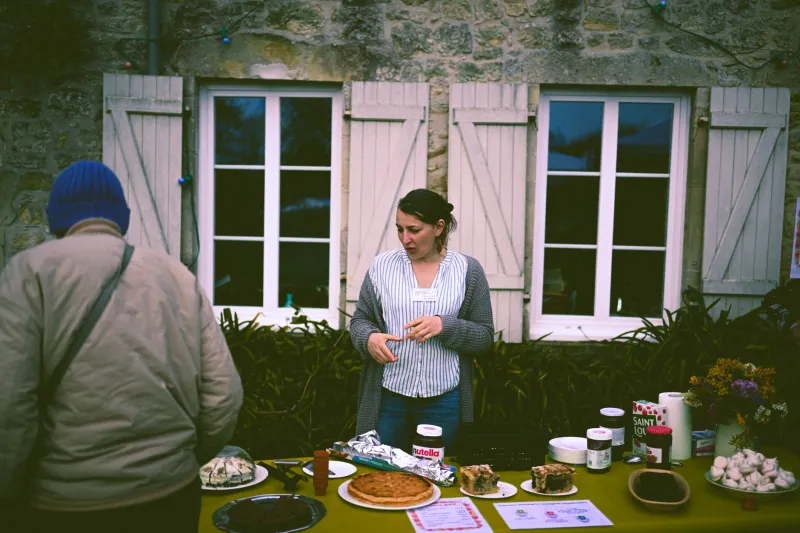
Launch at a school event, not in a vacuum. A stall at the Christmas fair, a coffee morning or a class assembly works well. Have a QR code linking to the order form and a few sample pages to flick through. If you sell a digital PDF as well, price it clearly and accept that some sharing will happen — it is usually a small price for goodwill.
The numbers that make it worthwhile
Suppose 180 families pre-order at £9. That is £1,620. Local ads bring in £400. Printing 210 copies costs £840. After a small design cost and card fees, the PTA clears around £1,100. Not a fortune, but a solid, repeatable fundraiser with almost no leftover stock.
The cookbook works best when it is treated as a community project with a business plan, not a lovely idea with a hopeful print run. Ask for recipes, take orders, check the rights and allergens, print what you can sell, and let the storage cupboard go back to storing PE kit.